
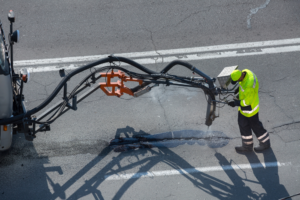
Urban road maintenance supported by sustainable asphalt recycling solutions

In an era of aging infrastructure, climate volatility, and constrained budgets, the global road maintenance landscape is rapidly changing. For decision-makers, contractors, and equipment suppliers in the asphalt and road maintenance industry, understanding these trends isn’t optional — it’s strategic.

1. Budget Realities: Funding Pressures and Priorities
Across markets from North America to Europe and Asia Pacific, governments are facing similar challenges:
• Aging road networks requiring more frequent repair cycles
• Competing priorities for limited infrastructure budgets
• Demand for sustainable and cost-effective maintenance solutions
According to global infrastructure funding reports, maintenance allocations often fall below optimal levels, forcing agencies to prioritize critical corridors and defer routine care. This creates both pressure and opportunity for industry partners who can deliver higher productivity with lower lifecycle costs.

2. Sustainability Is No Longer Optional

Environmental stewardship is reshaping priorities:
Reclaimed Asphalt Pavement (RAP) is becoming a standard practice to reduce raw material dependency.
• Governments in Europe and North America are offering incentives for recycled content in road work.
• Lifecycle carbon impact metrics now influence procurement decisions.
What this means: Asphalt and recycling equipment that supports on-site processing (e.g., asphalt recyclers, crack sealing machines with eco-friendly fuel options) will be perceived as strategic assets, not just tools.

3. Extreme Weather and Resilient Pavement Strategies
Climate shifts are hitting infrastructure budgets hard. Extended heat waves, intense rainfall, and freeze–thaw cycles accelerate pavement degradation.
• Australia has seen notable deterioration in urban routes due to heat-related asphalt rutting.
• In the U.S., winter freeze cycles contribute to pervasive cracking and potholes.
• European cities are investing more in drainage-friendly pavements and micro-surfacing techniques.
These regional stressors drive demand for fast, robust maintenance equipment — including:
• Asphalt crack grooving machines
• Walk-behind and ride-on rollers
• Portable recycling units

4. Technology Adoption: Data-Driven Maintenance
Digital tools are increasingly being integrated into project planning and execution:
• Pavement condition sensors and mobile inspection apps
• Predictive maintenance models using AI and GIS
• Machine telematics for fleet performance tracking
For equipment suppliers, embracing IoT-ready machines and offering data insights adds value for fleet managers and high-level stakeholders. This positions your brand not just as a manufacturer, but as a partner in optimized asset management.

5. Strategic Takeaways for Equipment Leaders
Design for efficiency: Buyers are measuring output per hour more rigorously than ever.
Promote sustainability credentials: Recycle and low-emission capabilities differentiate products.
Support digital integration: Data-ready machines win executive buy-in.
Educate the buyer: Market insights blogs (like this one) signal leadership and build trust.
Conclusion: Positioning for the Future
The global road maintenance ecosystem is evolving — shaped by funding realities, environmental priorities, and technological advancements. For contractors and agencies, the solution lies not just in repairing roads, but in investing in smarter, sustainable, resilient maintenance strategies.
For manufacturers and suppliers of asphalt equipment, this means aligning product portfolios and thought leadership with the needs of a more demanding, data-savvy market.

見積依頼
すべての製品は12ヶ月間保証されます!